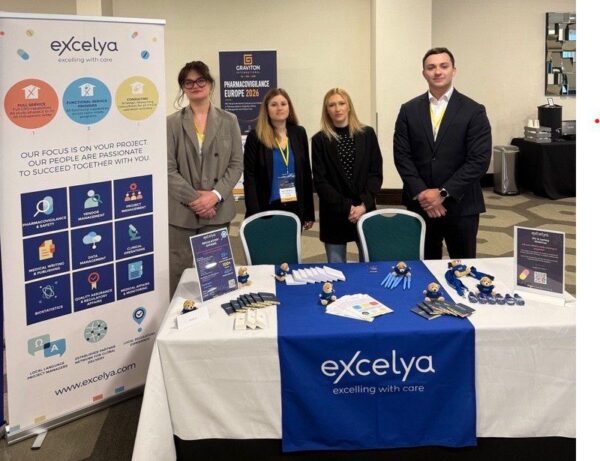
Excelya at PV Europe 2026: Drug Safety Insights
Published on: 08/06/2026
Introduction, from the floor of London
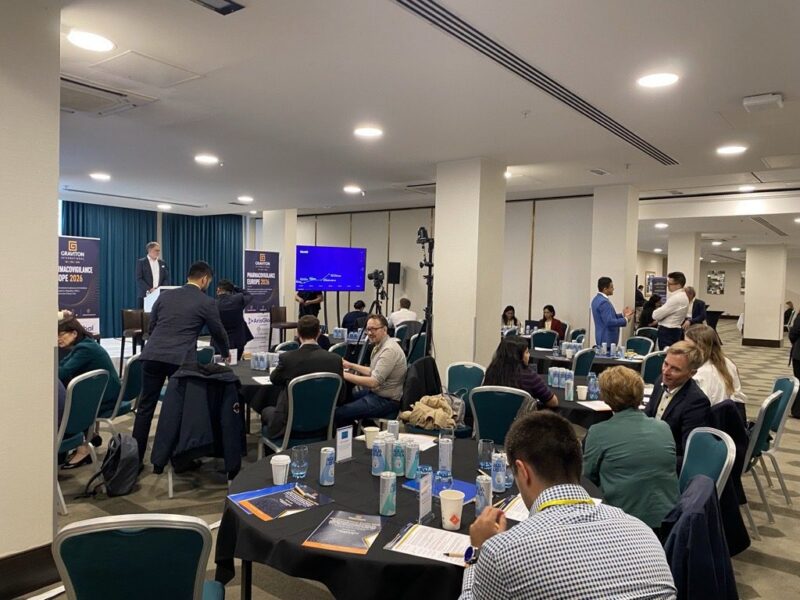
Pharmacovigilance Europe 2026 highlighted how AI, inspection readiness, vendor oversight, local safety teams and cross-functional collaboration are shaping the next era of drug safety. Held in London under the theme “AI, Access, and Accountability: Shaping the Next Era of Pharmacovigilance & Drug Safety”, the 15th Annual International Conference and Exhibition in Pharmacovigilance, Regulatory Affairs, Risk Management and Clinical Trials brought together safety leaders to discuss the practical future of PV. Across the two-day agenda, one message was clear: pharmacovigilance is no longer only about managing cases and meeting reporting timelines. It is becoming a more connected, data-driven and patient-centered function, where technology, local insight, quality systems and human judgement must work together..
Europe’s Trusted PV Community
Why Pharmacovigilance Europe 2026 matters
Pharmacovigilance Europe 2026 came at a decisive moment for the industry. PV teams face growing case volumes, more complex safety data, evolving regulatory expectations and stronger pressure to show that safety systems remain inspection ready across global markets. The agenda reflected this shift. Sessions covered AI in pharmacovigilance, signal detection, the role of local market safety teams, inspection readiness, audits, modern PV operating models and the future path of patient safety. Together, these themes showed how safety leaders are moving from reactive compliance toward proactive, integrated risk management.
“
The next era of pharmacovigilance will not be defined by technology alone. It will depend on how well organizations connect AI, people, processes, local safety intelligence, quality systems and accountable decision making.
”

Excelya Top Insights from London
Top Drug Safety Takeaways from Pharmacovigilance Europe 2026
Cross-functional collaboration remains a challenge for PV
Patient safety cannot sit within PV alone. Stronger collaboration is needed across PV, Regulatory Affairs, Quality Assurance, Supply Chain and Manufacturing. One important point raised was that PV teams are still sometimes excluded from critical discussions, such as out of stock issues, even when these can have a direct patient safety impact.
AI is already transforming pharmacovigilance
AI is no longer a future concept in PV. It is already being integrated into pharmacovigilance activities. However, its use needs to be clearly defined. Transparency, regulatory compliance and human oversight remain essential, especially for safety-critical decisions.
Inspection readiness requires technical, cultural and local awareness
Inspection expectations vary significantly across regions, and in emerging markets such as Africa, audits can be particularly demanding. Success depends not only on technical compliance, but also on understanding local expectations, communication styles and cultural context. This also highlights the growing strategic role of local PV teams, who are closer to patients, healthcare systems, local authorities and country-specific realities.
Vendor oversight is becoming increasingly risk based
As PV operating models rely more on external partners, vendors and service providers, oversight needs to go beyond fixed audit schedules. The focus is shifting toward risk-based monitoring, stronger KPI follow-up, clear ownership, effective CAPA management and alignment between agreements and day-to-day operations.
Patient safety is becoming lifecycle based
Safety is expanding beyond traditional PV boundaries. Discussions highlighted the need for earlier PV involvement across the product lifecycle and better integration of diverse data sources. An important insight was that adverse events may even arise during manufacturing. Even without a fully established regulatory framework, companies are increasingly expected to document, assess and manage these signals.
Taken together, these discussions showed that the future of pharmacovigilance is not only about better systems or more data. It is about building smarter, more connected and more accountable safety organizations that can protect patients across the full lifecycle.
Vendor Oversight
PV Europe 2026
Patient Safety
Looking Forward
Looking Forward: The Next Chapter in Drug Safety and Pharmacovigilance
The direction discussed at Pharmacovigilance Europe 2026 aligns closely with Excelya’s view of modern pharmacovigilance and safety: effective PV requires experience, flexibility, local expertise and uncompromising quality. For pharma, biotech and medical device organizations, the challenge now is to turn conference insights into operating models that work in practice. That means using AI carefully, strengthening inspection readiness, improving vendor oversight and keeping patient safety visible across every decision point.
Excelya supports pharmacovigilance activities across pre- and post-marketing safety, with expertise spanning local PV support, safety operations, quality systems, regulatory understanding and flexible delivery models. As the next era of drug safety takes shape, this combination of people, process and practical experience will remain essential.
Frequently Asked Questions

What was Pharmacovigilance Europe 2026 about?
Pharmacovigilance Europe 2026 focused on the next era of drug safety, with major discussions around AI, access, accountability, regulatory expectations, inspection readiness, patient safety and the evolution of modern PV operating models.
Why was AI in pharmacovigilance a major theme?
AI in pharmacovigilance was a major theme because PV teams face rising data volumes, manual case processing burden, signal detection challenges and growing expectations for faster insights. However, AI still requires governance, validation, transparency and human oversight.
How is inspection readiness changing in pharmacovigilance?
Inspection readiness is becoming more continuous, global and culturally aware. Teams need strong technical processes, clear documentation, trained people, local regulatory awareness and the ability to explain how decisions are made
Why does vendor oversight matter in drug safety and pharmacovigilance?
Vendor oversight matters because many PV activities depend on partners, local vendors, technology providers and outsourced teams. Risk-based oversight helps companies identify gaps, review KPIs, manage CAPAs and prepare for inspections.
How can companies strengthen patient safety across the product lifecycle?
Companies can strengthen patient safety by involving PV earlier, integrating data from multiple sources, empowering local safety teams, improving cross-functional collaboration and documenting safety-relevant signals throughout the lifecycle.